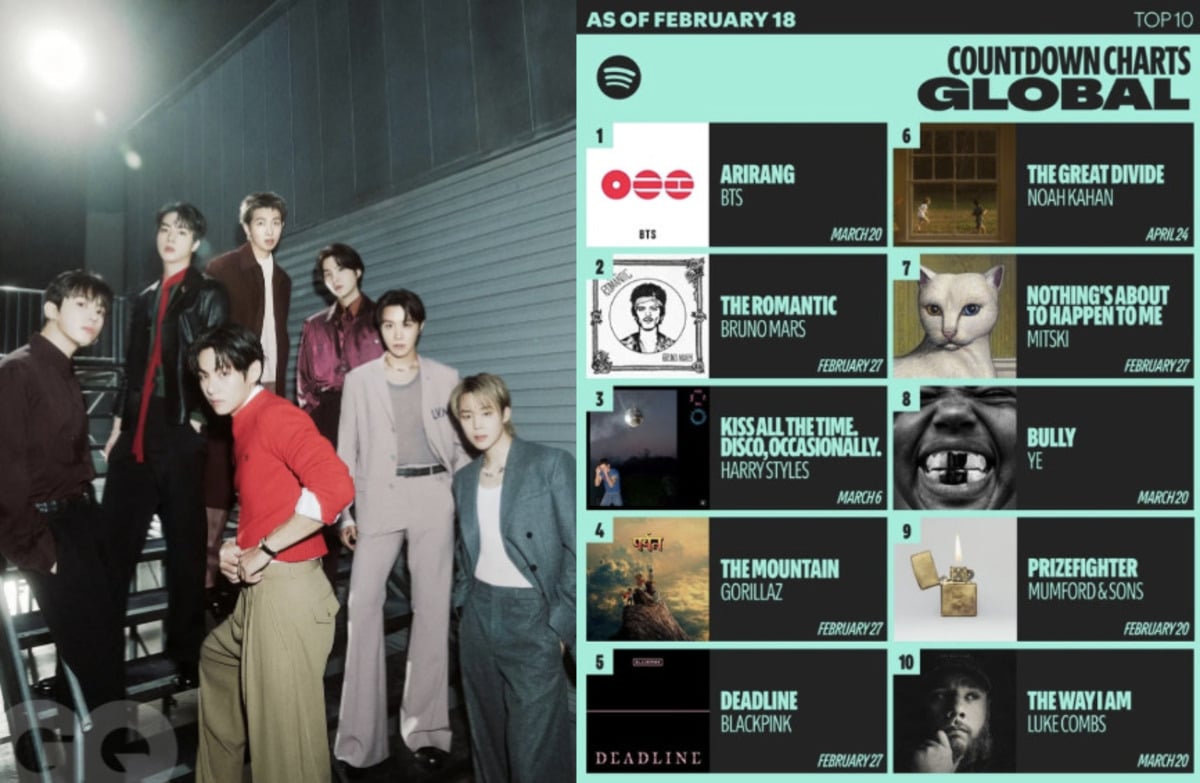
Despite a recent warming of relations between Seoul and Beijing, prospects for lifting the “Hallyu Ban” (a ban on Korean content) remain dim. A primary example is the exclusion of mainland China from BTS’s 2026 world tour, which consists of 79 performances across 34 global cities.
According to a report by the Singaporean media outlet Lianhe Zaobao on Feb. 1, 2026, while BTS boasts over 5.6 million followers on Weibo, the group has only confirmed three shows in Hong Kong for March 2027. This underscores that the unofficial restrictions—triggered by the 2016 THAAD deployment—remain firmly in place for the Chinese mainland, where large-scale K-pop tours have been non-existent for nearly a decade.
Industry insiders and scholars remain cautious about a full-scale reopening. While South Korean President Lee Jae-myung’s recent visit to China signaled a diplomatic thaw, experts suggest any relaxation of cultural restrictions will be “painfully slow.” Sarah Keith, a media scholar at Macquarie University, noted it could take up to five years for South Korean artists to restore their presence to pre-ban levels. She also highlighted a “cultural deficit,” where heavy Chinese consumption of Korean content might lead Beijing to prioritize its own domestic industry interests.
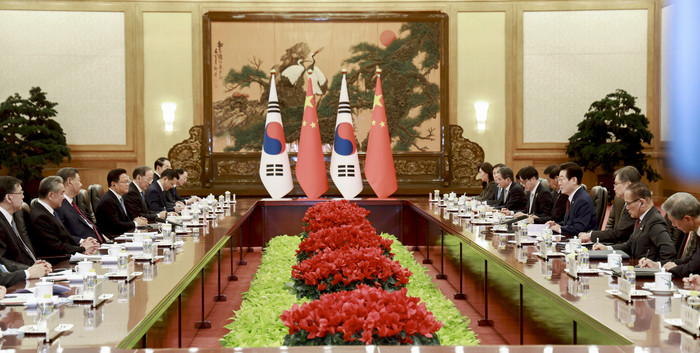
This conservative outlook aligns with President Xi Jinping’s recent remarks during a bilateral summit. Offering a reserved take on the situation, President Xi reportedly stated, “A three-foot layer of ice does not freeze in a day, nor will it melt all at once. Fruit falls only when it is ripe.” While small-scale “cultural exchanges” like fan signings may gradually resume in Tier-1 cities, analysts believe stadium-level tours are unlikely to return soon as Beijing continues to balance market demand with domestic industry interests.
SEE ALSO: BTS earns new Japan streaming certifications as ‘Yet To Come’ goes platinum